原子力汎用航空母艦
原子力汎用航空母艦
| アイコン | 意味 |
 |
戦闘や事故で失った場合(沈没、墜落)や損傷した場合、艦船などの内部で事故や事件がおこった場合の意味です。自軍や同盟軍、所属機関、所有会社が行った沈没処分や破壊処分、漁礁としてまたは演習で使用して沈めた場合にはこのアイコンは付けません |
 |
戦果や功績、各機関に寄贈された場合の意味です。戦争などで沈没し、何十年後に発見された場合もこのアイコンです |
 |
映画やTVドラマ、ドキュメンタリーに使用された場合の意味です |
 |
参考文献、小説や書籍に登場する事柄です |
 |
インターネットやTVゲームに登場する事柄です |
 |
不可解な事故&事件およびUFOなど超常現象に遭遇した事柄です |
- ※PSAは試験航海後の有用性(Post Shakedown Availability)の略(ABC順)
| 満載排水量 | 101,600t |
| 全長 | 332.84m |
| 幅 | 水線40.84m/最大77.41m(78.02mともいわれる) |
| 吃水 | 11.88m(12.40mともいわれる) |
| 主機 | ベクテルA1B原子炉2基、蒸気タービン4基 |
| 軸数 | 4軸 |
| 速力 | 30.0kt+ |
| 兵装 |  発展型シー・スパロー短SAM(ESSM)発射機2基 発展型シー・スパロー短SAM(ESSM)発射機2基 RAM近接防御SAM21連装発射機2基 RAM近接防御SAM21連装発射機2基 76口径20mmCIWS 76口径20mmCIWS 25mmMk. 38機関砲システム4基 25mmMk. 38機関砲システム4基 12.7mmM2機関銃4挺 12.7mmM2機関銃4挺 |
| 塔載機 | 75機 |
| 装甲 | 水線135mm、フライト・デッキ45mm、ハンガー・デッキ50mm、主甲板64mm+要区画のケヴラー防護 |
| 乗員 | 4,297名(航空要員も含む、4,660名ともいわれる) |
| レーダー | レイセオン/古野電気SPS-73対水上兼航海レーダー1基ロッキード・マーチン式SPY-4広域捜索レーダーレイセオン式SPY-3多機能レーダーMk. 95ミサイル射撃管制レーダー(CVN-79、1、2) |
| TAKAN | URN-25 |
| 電子戦装置 | レイセオン式SLQ-32(V)総合電子戦装置Mk. 36 SRBOCデコイ・システム(Mk. 137 6連装発射機8基)SLQ-25Cニクシー対魚雷デコイ |
- ※2018年7月15日に開始したPSAにて武器エレヴェーターが完成。新しいエレヴェーターはリニアモータで駆動、原子力汎用航空母艦ニミッツ級のケーブル駆動エレヴェーターよりも高速に大容量の兵装を移動できる。ニミッツ級のエレヴェーターは毎分30.48mで4,762kgの兵器を運ぶが、このエレヴェーターは毎分45.72mで最大10,886kgを運ぶ。3基の上段エレヴェーターがメイン・デッキとフライト・デッキを、7基の下段エレヴェーターがメイン・デッキと下の階層の間で兵器を移動する。エレヴェーターの設置とテストは2019年夏に完了予定
- ※海軍長官のジョン・フェラン氏 Secretary of the Navy John Phelanは2026年4月21日、海軍がフォード級空母を調査し、同級の次期2隻の設計を変更すべきかどうかを判断するための新たな研究を最終段階に入れていると述べた。海軍は、海軍が次に購入予定の空母CVN-82とCVN-83の設計を評価し、プラットフォームのコストと能力を査定していると、フェラン氏は4月21日、海軍協会の年次海空宇宙シンポジウムで行われたメディア向け円卓会議で記者団に語った
- ※トランプ大統領は、米海軍の次期フォード級航空母艦について設計変更を命じ、電磁式航空機発進システム(Electromagnetic Aircraft Launch System: EMALS)および先進型兵器用エレヴェーター(Advanced Weapons Elevator systems: AWE)の採用を取りやめるよう指示したことが、USNIニュースの取材で明らかになった。ウォール・ストリート・ジャーナル紙が最初に報じた2026年8月13日付の覚書によると、この変更に伴い、海軍は将来のフォード級空母において、電磁式システムを蒸気式カタパルトに、先進型兵器用エレヴェーターを油圧式システムに置き換える必要がある。国防長官と海軍長官は2ヶ月以内に、CVN-81(将来の「ドリス・ミラー」)を皮切りにこれらのシステムをどのように置き換えるかについての計画を提出しなければならない。大統領の覚書には次のように記されている。“本覚書の日付から60日以内に、国防長官は海軍長官と協議の上、CVN-81の建造において電磁式航空機発進システムおよび先進型兵器用エレヴェーターを蒸気式および油圧式システムに置き換えるために必要な措置(スケジュールや資源要件を含む)に関する計画を、行政管理予算局(Office of Management and Budget: OMB)局長および大統領補佐官(国家安全保障担当)を通じて大統領に提出するものとする”
- ※米海軍の最高責任者は2026年8月中旬、ジェラルド R. フォードが、同空母の発着艦システムの試験において、従来のニミッツ級空母を上回る性能を発揮したと述べた。海軍作戦部長のダリル・コードル大将 Chief of Naval Operations Adm. Daryl Caudleは、ネヴァダ州リノで開催されたテイルフック・シンポジウムの円卓会議で、フォードに搭載された電磁式発射システム(EMALS)と先進的な着艦制動装置の2月のストレス・テストで、ニミッツ級よりも高い出撃率が得られたと述べた。このテストは、フォードがカリブ海に停泊中に実施され、そののち、米欧州軍司令部 U.S. European Commandと紅海へ向かった
- ※装甲、兵装、装備変遷はこちら
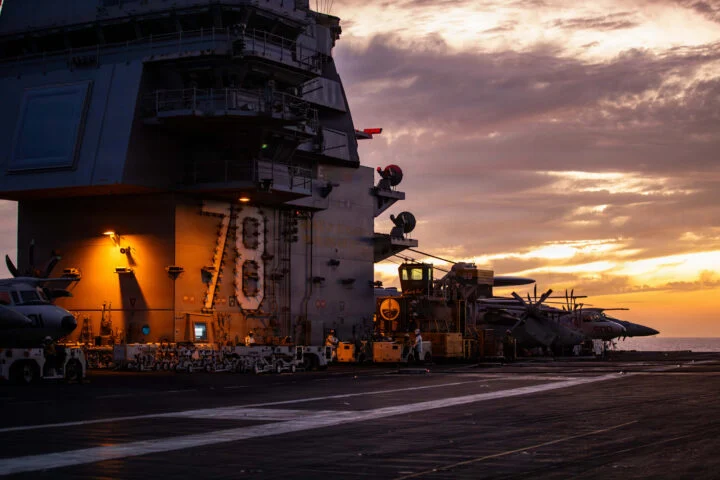
↑USS Gerald R. Ford Comes Home. Image courtesy of USNI news.
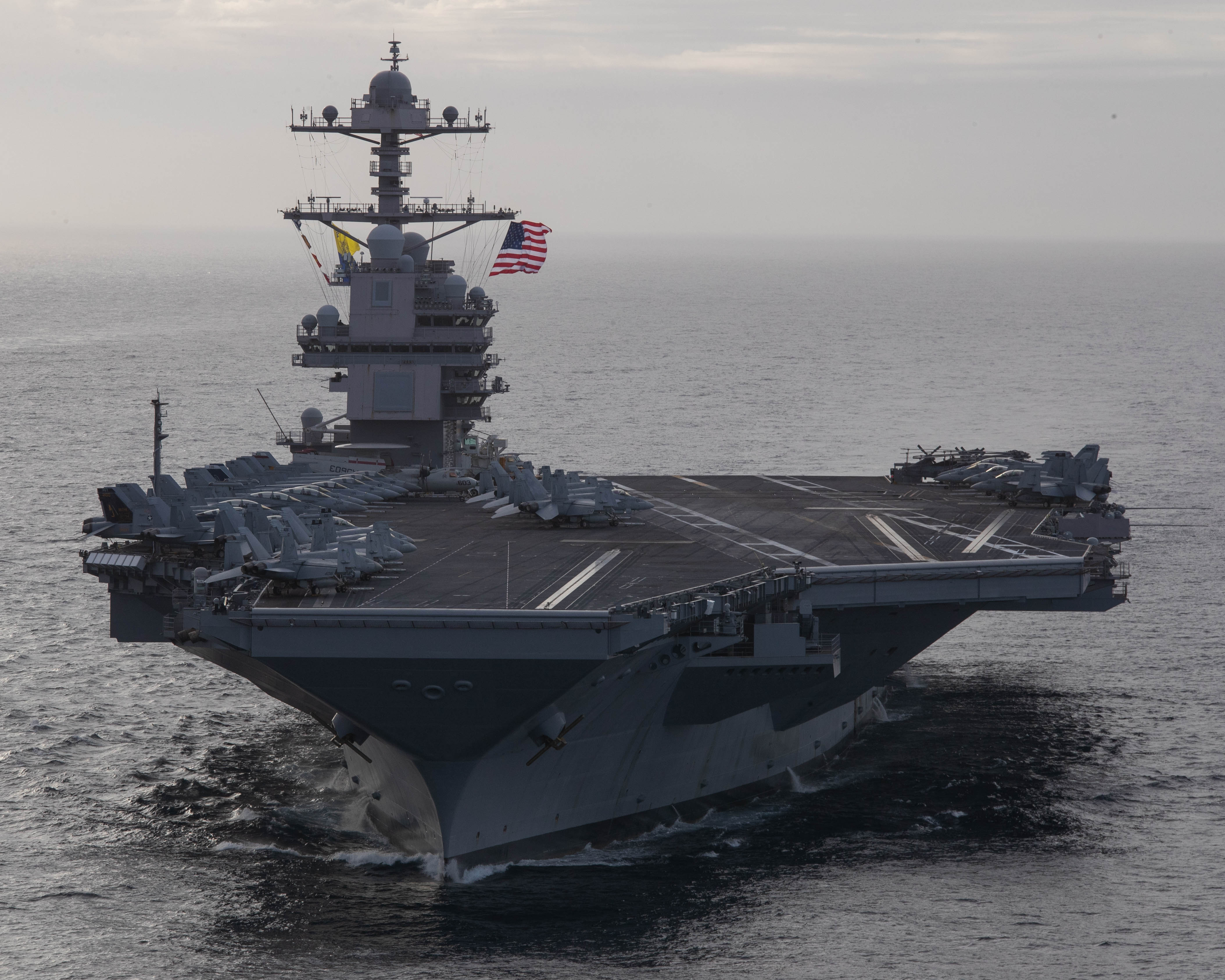
↑ATLANTIC OCEAN (Oct. 25, 2022) - The first-in-class aircraft carrier USS Gerald R. Ford (CVN-78) steams in the Atlantic Ocean, Oct. 25, 2022. The Gerald R. Ford Carrier Strike Group (GRFCSG) is deployed in the Atlantic Ocean, conducting training and operations alongside NATO Allies and partners to enhance integration for future operations and demonstrate the U.S. Navy's commitment to a peaceful, stable and conflict-free Atlantic region. (U.S. Navy photo by Mass Communication Specialist 2nd Class Jackson Adkins)
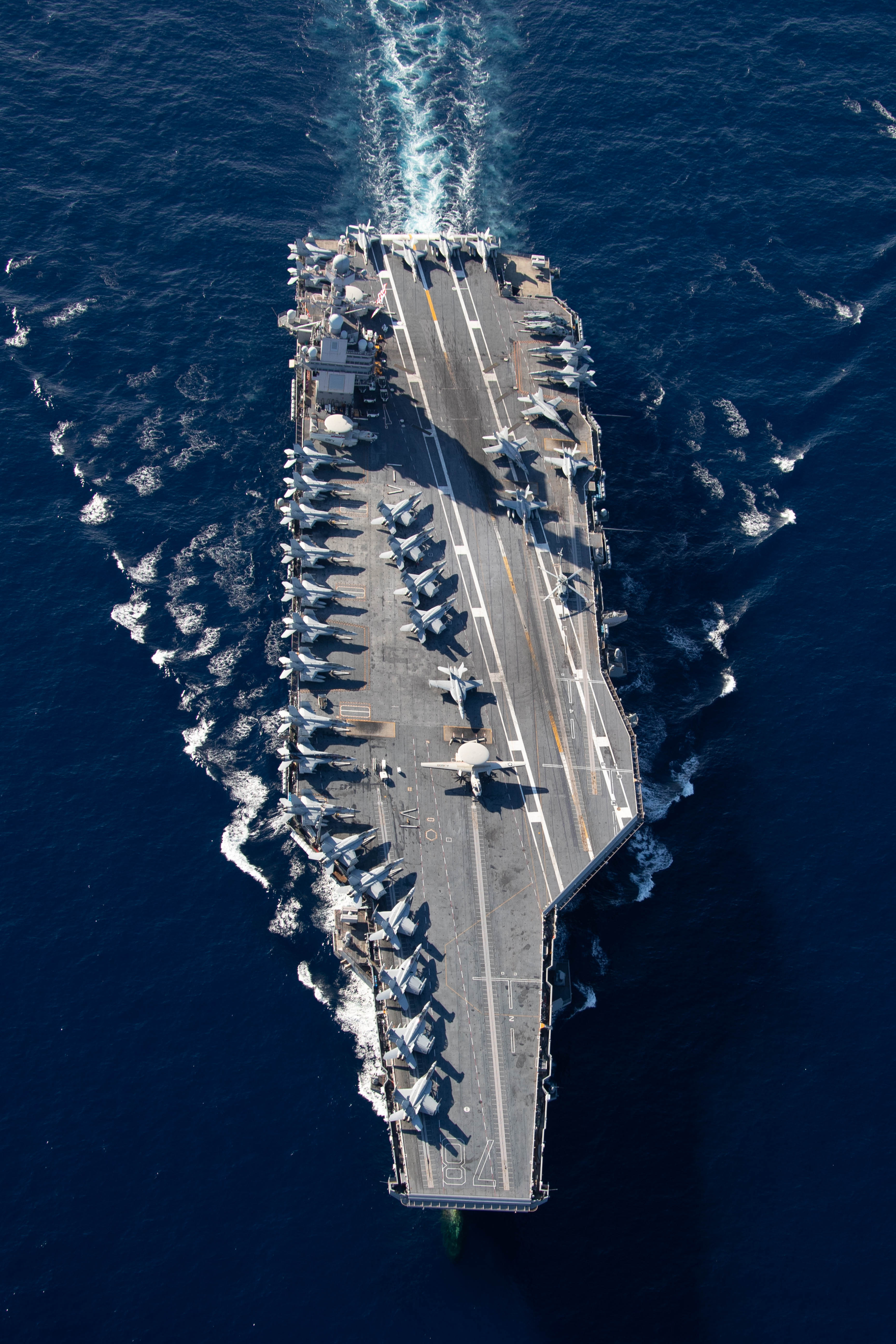
↑ATLANTIC OCEAN (Oct. 20, 2022) - The first-in-class aircraft carrier USS Gerald R. Ford (CVN-78) transits the Atlantic Ocean, Oct. 20, 2022. The Gerald R. Ford Carrier Strike Group (GRFCSG) is deployed in the Atlantic Ocean, conducting training and operations alongside NATO Allies and partners to enhance integration for future operations and demonstrate the U.S. Navy's commitment to a peaceful, stable and conflict-free Atlantic region. (U.S. Navy photo by Mass Communication Specialist 2nd Class Jackson Adkins)

↑The future USS John F. Kennedy (CVN-79) transits to Naval Station Norfolk, Virginia, October 2, 2026, following her departure from HII's Newport News Shipbuilding division in Newport News, Virginia, after four days at sea. John F. Kennedy is the second Gerald R. Ford-class aircraft carrier, representing the next generation of U.S. Navy aircraft carrier capabilities and supporting the Navy's commitment to maintaining maritime superiority and global readiness. (U.S. Navy photo by Mass Communication Specialist 2nd Class Julianna Lynch)
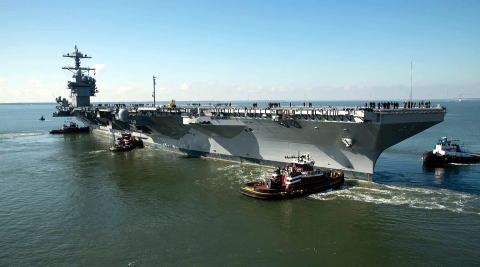
↑The future USS John F. Kennedy (CVN-79) left Jan. 28, 2026, from HII's Newport News Shipbuilding division for builder's trials. HII photo. Image courtesy of USNI news.
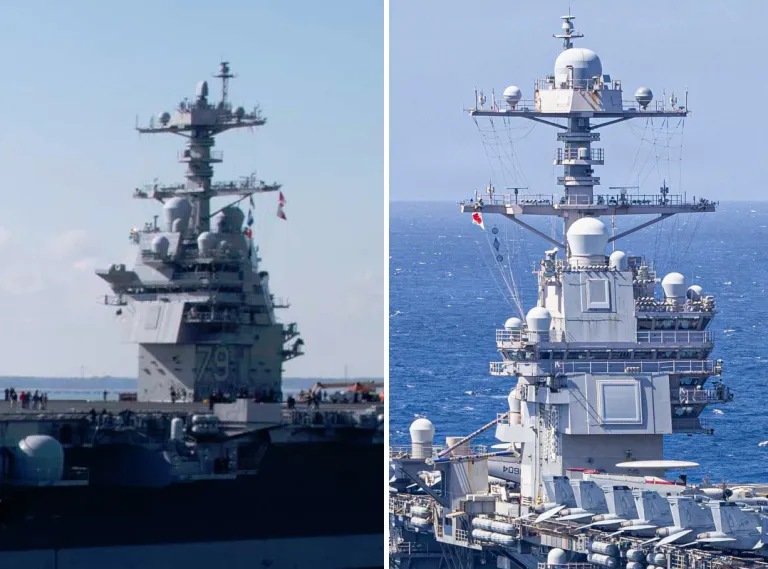
↑A side-by-side comparison for the islands on the future USS John F. Kennedy, at left, and the USS Gerald R. Ford, at right. HII/USN. Image courtesy of The War Zone.


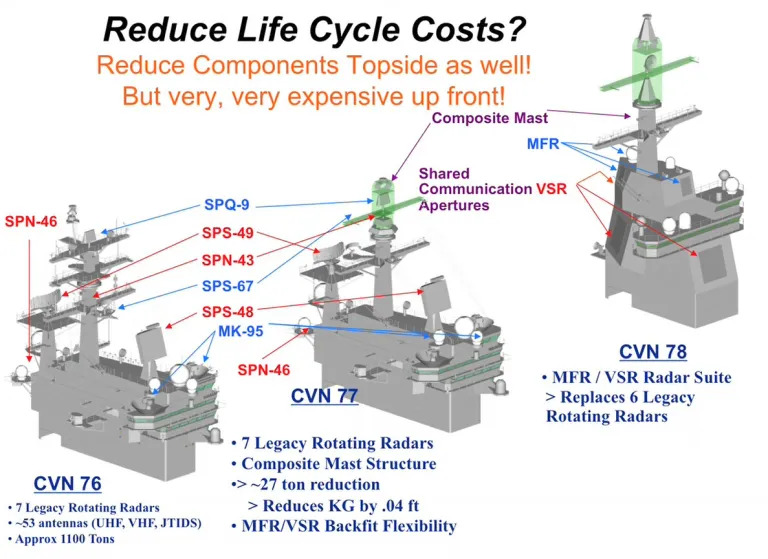
↑A more detailed comparative look at the island designs on the Nimitz class carriers USS Ronald Reagan (CVN-76) and USS George H.W. Bush (CVN-77), as well as the USS Gerald R. Ford (CVN-78), from Tal Manvel's 2015 presentation. U.S. Naval Academy Museum capture. Image courtesy of The War Zone.
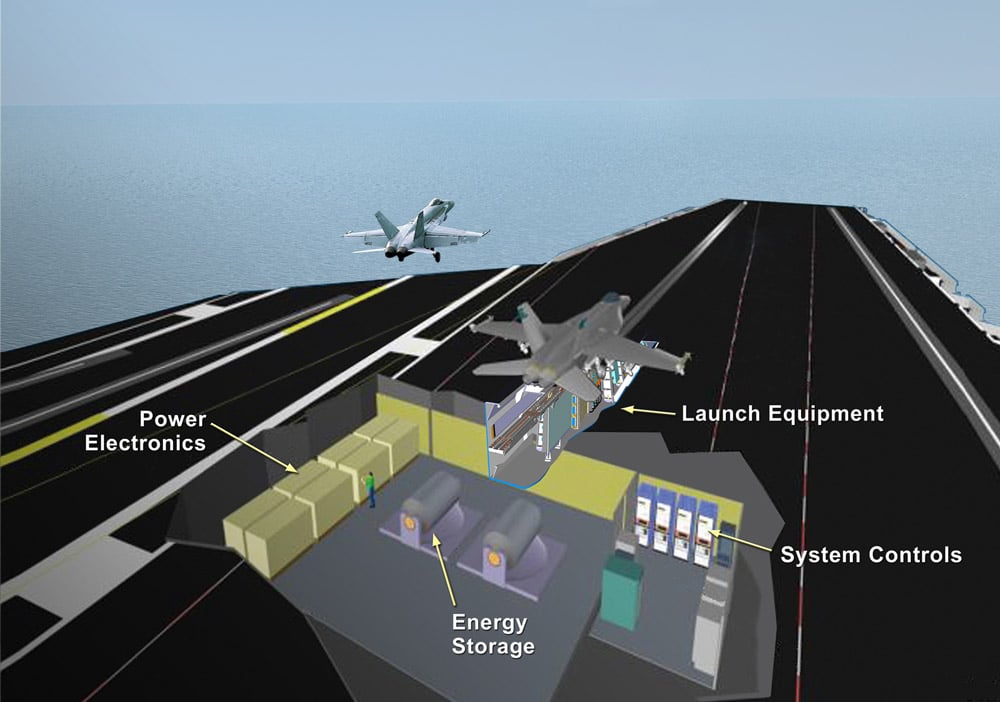
↑An artist's conception of the electromagnetic launch systems (EMALS). General Atomics Photo. Image courtesy of USNI news.
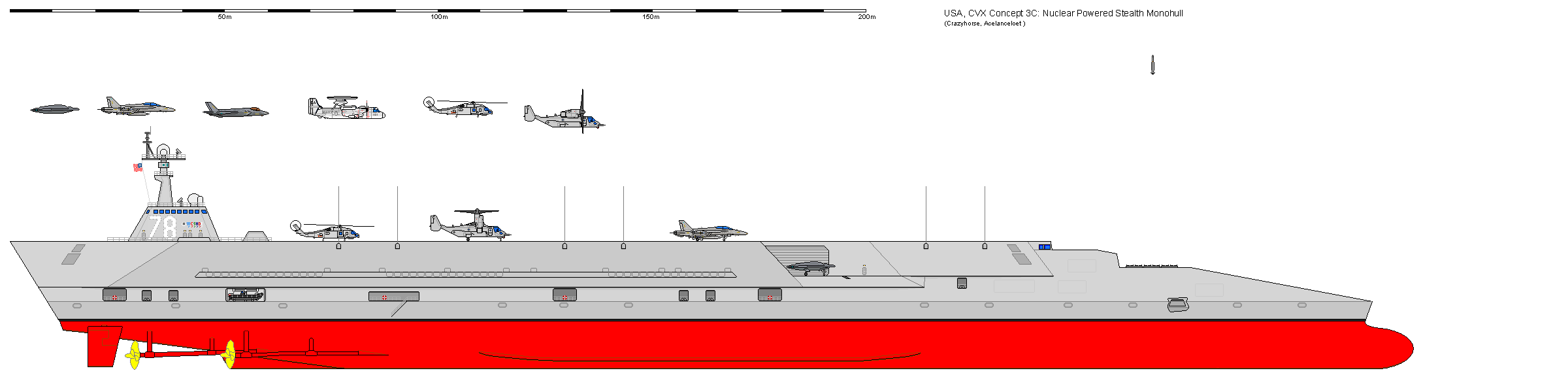
- ※CVX計画には、さまざまなデザイン案があった。まず、Large Air Wing(80機搭載型)にCTOL(通常発着陸)機用通常動力航空母艦案でStudy 2B(Traditional FLT DK)とStudy 2B1(CVV Equivalent)。原子力航空母艦案でStudy 2(Traditional FLT DK)とStudy 2A(Study 2-Alt FLT DK)。STOVL(短距離離陸垂直着陸)機用通常動力航空母艦案でStudy 2C1(STOVL FLT DK)。原子力航空母艦案でStudy 2C(STOVL FLT DK)。次に、Medium Air Wing(60機搭載型)にCTOL(通常発着陸)機用通常動力航空母艦案でStudy 3B(Study 3-Conventional)とStudy 3B1 (CVV Equivalent)とStudy 3D(Stealth Catamaran)。原子力航空母艦案でStudy 3(Traditional FLT DK)とStudy 3A(Study 3-Alt FLT DK)とStudy 3C(Stealth Monohull)。そして、Small Air Wing(40機搭載型)にCTOL(通常発着陸)機用通常動力航空母艦案でStudy 4(Traditional FLT DK)とStudy 4A(Study 4-Alt FLT DK #1)とStudy 4A(Study 4-Alt FLT DK #2)。原子力航空母艦案でStudy 4C(Traditional FLT DK)。STOVL(短距離離陸垂直着陸)機用通常動力航空母艦案でStudy 5(Traditional FLT DK)とStudy 5A(Study 5-Alt FLT DK #1)とStudy 5A(Study 5-Alt FLT DK #2)とStudy 5D(CVV Equivalent)。原子力航空母艦案でStudy 5C(Traditional FLT DK)とあった
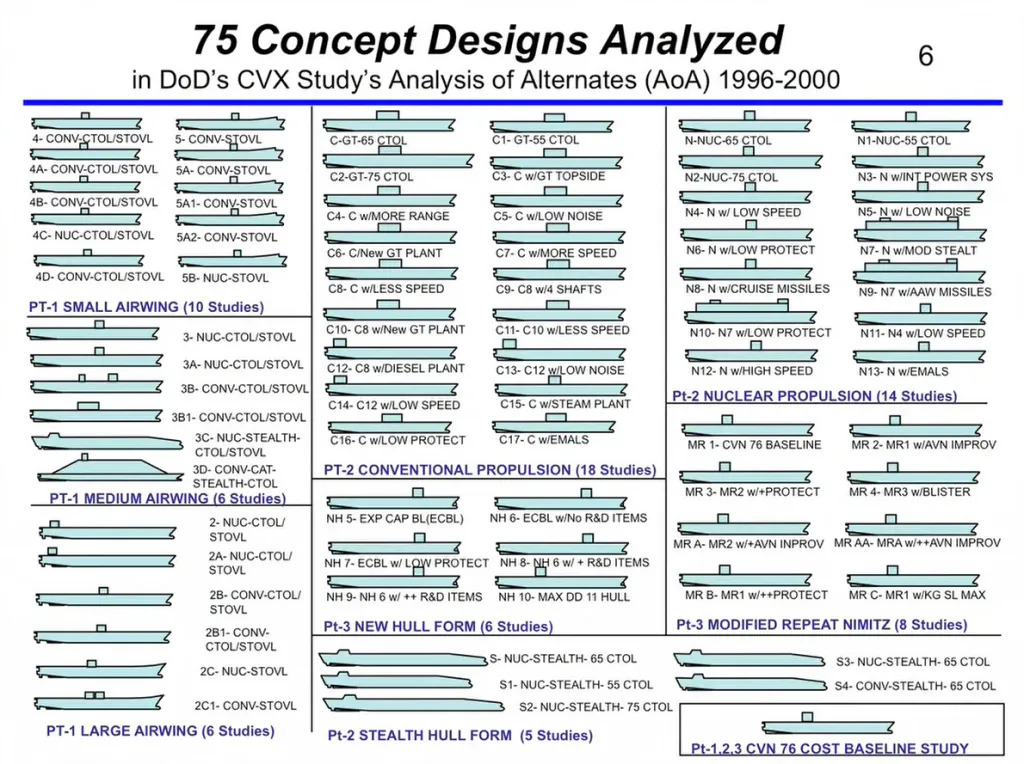
↑A slide from retired Navy Capt. Tal Manvel's 2015 presentation offering a general look at the conceptual designs the Navy explored in the early stages of the CVX effort that led to the Ford class. U.S. Naval Academy Museum capture. Image courtesy of The War Zone.
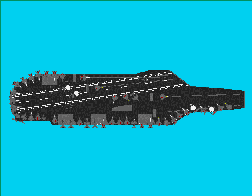
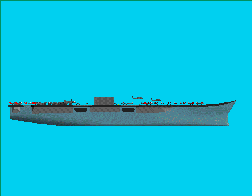
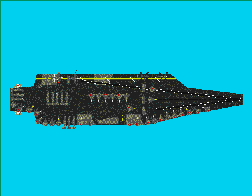
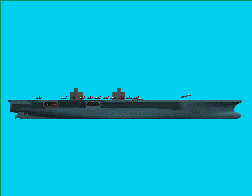
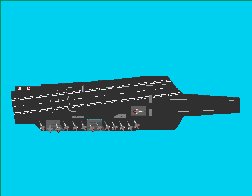
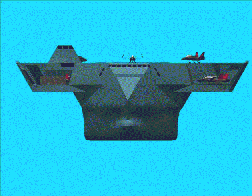
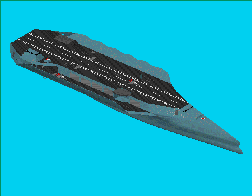

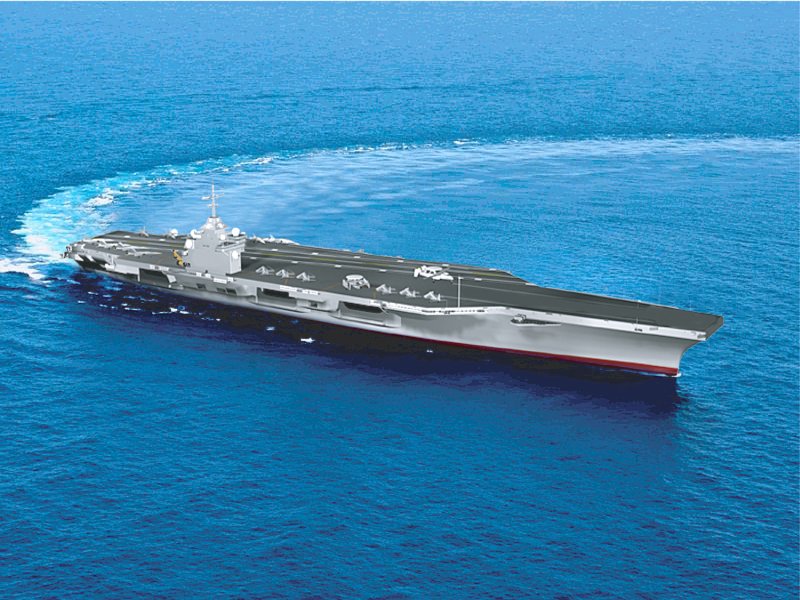
| 艦名 | NAME | 艦種記号 | 建造所 | 就役日 | 退役日 | 除籍日 | 備考 |
| ジェラルド R. フォード (1、2) |
Gerald R. Ford | CVN-78 | ノースロップ・グラマン・ニューポート・ニューズ社 | 2017/7/22 | ◎2007/1/16 艦名をジェラルド R. フォードにすると発表(1、2、3、4、5) ◎2009/11/14 起工(1、2、3、4、5、6、7、8、9、10、11、12、13、14、15) ◎2013/10/11 ヴァージニア州ニューポート・ニューズのハンティントン・インガルス・インダストリーズ社ニューポート・ニューズ・シップビルディング部門のDrydock No. 12にて注水作業開始(1、2、3、4、5、6、7) ◎2013/11/9 命名式(1、2、3、4、5、6、7、8、9、10、11、12、13、14、15、16) ◎2013/11/17 ニューポート・ニューズのハンティントン・インガルス・インダストリーズ社ニューポート・ニューズ・シップビルディング部門のピア3に移動(1、2、3、4、5) ◎2015/6/5 電磁式カタパルト(EMALS)の死重を使った最初の射出試験(James Riverに艦首を向けて時速257.49km/hで飛翔、91.44mに着水) ◎2016/2/19 電磁式カタパルト(EMALS)の死重を使った射出試験 2016/4/7 ハンガー内にてジェラルド R. フォード大統領 President Gerald R. Fordを称える銅像の除幕式(1、2)2016/6/12 2番ターボ発電機をテスト中、トラブル(破片が四散)2016/7 2番ターボ発電機にてまた破片が四散2017/3/2 ドナルド J. トランプ大統領 President Donald J. Trumpが乗艦、視察◎2017/4/13 大西洋にてフライト・デッキを清掃 ◎2017/5/25 大西洋にてフライト・デッキを清掃 ◎2017/5/31 引き渡される ◎ヴァージニア州ノーフォークにて就役(1、2、3、4、5、6) 2017/7/28 ヴァージニア沖にて就役後、初の発着艦を実施(1、2、3、4、5)◎2018/5/22 ノーフォークのピア11Nにて推進システムの緊急修理(~2018/5末) ◎2018/7/15 ニューポート・ニューズのハンティントン・インガルス・インダストリーズ社ニューポート・ニューズ・シップビルディング部門のピア2にてPSA/SRA(~2024/6予定、修理額$763,460,691(耐衝撃試験で使用する資材の追加について修正契約の$9,770,691も含む、早期耐用年数期間作業のための$687,090,000も含む。5段階・60ヶ月の契約で、2024/6まで。このうち初期分は2020/6まで) ◎2019/7/22 主機を対象とする整備・修理作業が完了(2018年1月に発覚した部品の製造不良や、2018年5月の試験航海中に発覚した不具合に対処するためのもの) ◎2019/10/25 公試(~2019/10/30) ◎2020/1/16 大西洋にて航空機互換性試験(ACT: Aircraft Compatibility Testing、VX-20、VX-23所属機、~2020/1/31) 2020/2/5 航空機互換性試験に合格◎2020/3/26 初のCQ(Carrier Qualifications)が実現。対象はFRS(Fleet Replacement Squadron)のVFA-106 とVAW-120(~2020/4/2) ◎2020/4/2 大西洋にてハンガー・デッキ内を清掃 ◎2020/4/7 PDT&T(Post-Delivery Test and Trials)の一環として、戦闘システムの内、 ATCRB(Air Traffic Control Radar Beacon)とIFF(Identification of Friend or Foe)の試験・認証プロセスが完了 ◎2020/4/7 Naval Air Training Command(TRACOM)のCQ(~2020/4/10) 2020/4/8 就役後、2,000回目の着艦を実施(TW-2所属機)◎2020/5/12 E-2Dへの機種転換を進めているVAW-117所属のエヴィエイター10名がCQ(Carrier Qualifications)を実施。発艦は151回、着艦は158回を実施 2020/5/19 EMALS(Electromagnetic Aircraft Launch System)とAAG(Advanced Arresting
Gear)を用いて、一日で167回の射出/回収を実施。この数字は過去最高2020/6/2 EMALS用の電力管制システムにトラブルが発生。乗艦している技術者が調査と対処を行い復旧(~2020/6/7)2020/6/3 General Atomics Electromagnetic System(GA-EMS)がEMALSとAAGが累計発着艦3,000回を突破したと発表◎2020/7/22 AWE(Advanced Weapons Elevator)の内、6基目の領収が実現 ◎2020/9/7 大西洋にて船体の一部を再塗装 2020/10/7 GA-EMSがEMALSとAAGが累計発着艦4,492回を記録したと発表◎2020/12/9 センサー機器の精度検証試験(Sensor Accuracy Test)を実施したと発表 ◎2021年2月から5段階に分けて実施してきていたCSSQT(Combat Systems Ship Qualifications Trials)が4月初めに完了 2021/4/19 EMALSとAAGが累計発着艦8,000回を記録したと発表◎2021/4/30 2019年10 月から18ヶ月間におよんだPDT&Tが完了 ◎2021/6/18 大西洋にて最初のFSST(Full Ship Shock Trials)が行われる(1、2、3、4、5、6、7、8、9、10、11、12、13、14、15、16、17、18) ◎2021/7/16 大西洋にて2回目のFSSTが行われる(1、2) ◎2021/8/8 大西洋にて3回目のFSSTが行われる(1、2、3、4、5、6、7、8、9) ◎2021/8/20 ニューポート・ニューズのハンティントン・インガルス・インダストリーズ社ニューポート・ニューズ・シップビルディング部門にてPIA(~2022/2/28、修理額$127,615,435、1、2、3、4、5、6、7、8、9、10、11、12、13、14、15、16、17、海軍は、現在建造中の航空母艦から部品を取り出してジェラルド R. フォード(CVN-78)に搭載し、2022年の配備に向けて準備を進めていることがUSNIニュースの取材で分かった。 この部品は、ニューポート・ニューズにあるハンティントン・インガルス・インダストリーズ社ニューポート・ニューズ造船所にて現在建造中のフォード級汎用航空母艦の2番艦、ジョン F. ケネディ(CVN-79)のものである。 海軍の買収担当スポークスマンであるクレイ・ドス大佐 Capt. Clay Dossは、USNIニュースに対し、フォードのためにケネディから持ち出された部品は、ポンプからリミットスイッチまで多岐にわたると語った。“部品の例としては、ストア・エレヴェーター stores elevatorsのHMIスクリーン HMI screensの他、船内の様々なシステムのモーター・コントローラ、電源、小型ポンプ、リミット・スイッチ limit switches、ヴァルヴ・アクチュエータ valve actuatorsなどがある。このようなことは、プログラムの初期には珍しくないが、サプライ・サポートが成熟するにつれて、その頻度は低くなる”。 ドス氏は、ケネディからフォードへの部品供給を決定したことについて、同氏がプログラム全体で使用している“プロジェクト管理ツール project management tool”と説明した。 ドス氏はUSNIニュースに対し、“部品や材料が供給システムで入手できないこと、及び/または代替品が入手できないことを確認した後に行われた”と述べている。“また、それぞれのケースで交換計画が必要とされた。CVN-78に移された部品はいずれもCVN-79の建造スケジュールに影響を与えないと予測されている”。 海軍海洋システム・コマンド Naval Sea Systems Commandは別の声明で、この手順は海軍のメンテナンス規則に沿ったものだと述べている。 海軍海洋システム・コマンドのスポークスマン、アラン・バリボー氏 Alan BaribeauはUSNIニュースに対し、“海軍の統合艦隊整備マニュアル Navy's Joint Fleet Maintenance Manualに従い、カニバリゼーションはCVN-78の準備態勢を強化するためのプロセスの一部として使用されており、供給システムにおいて材料が利用できないことが確認されたのち、あるいは代替品が利用できないことが確認されたのちにのみ開始される”と述べている) ◎2021/12/22 AWE(Advanced Weapons Elevator)の内、最期の領収が実現 ◎2022 カリフォルニア州サン・ディエゴのジェネラル・アトミックス社が同艦と陸上試験施設で使用している AAG(Advanced Arresting Gear)について、ブロックA21/A22維持管理フェーズ前に実施した認証試験で発覚した不具合の修正(~2023/4予定、修理額$14,456,036) ◎2022/3/29 大西洋にてFDC(Flight Deck Certification)と CATCC(Carrier Air Traffic Control Center)の資格認定を完了した。CVW-8 のF/A-18E/F、E-2D、MH-60Sを用いて実施(1、2、3) ◎2022/3/29 大西洋にてフライト・デッキで航空機牽引トラクターの定期メンテナンス 2020/6/29 累計 10,000 回目の発着艦を記録した2024/11/12 大西洋でアーレイ・バーク級ミサイル駆逐艦ウィンストン S. チャーチル Winston S. Churchill(DDG-81)、USSミッチャー
Mitscher(DDG-57)、マハン Mahan(DDG-72)、ベインブリッジBainbridge(DDG-96)、フォレスト・シャーマン
Forrest Sherman(DDG-98)と編隊を組んで航行する世界最大の空母ジェラルド R. フォード(CVN-78)。ジェラルド R.
フォード空母打撃群 Gerald R. Ford Carrier Strike Groupは、大西洋でグループ・セイル Group Sailを完了中。グループ・セイルは、通常の展開訓練サイクルにおける最初の洋上統合フェーズ訓練イヴェントである。これは、ジェラルド
R. フォード空母打撃群が、ジェラルド R. フォード、ウィンストン S. チャーチル、第8空母航空団 Carrier Air Wing (CVW)
8、第2駆逐隊 Destroyer Squadron (DESRON) 2、および乗艦情報戦チームの能力を結集した打撃群として活用し、海軍と統合の戦争遂行要件を満たすことに挑戦するためのもので、全領域にわたる戦争遂行能力と戦術的熟練度を向上させる◎2025/4/9 甲板部に配属された水兵が、ファンテイルの定期整備中にJバー・ダヴィット・ブラケットを取り付け直す 2026/3/12 サウジ・アラビアのAl Wajh沖の紅海北部にて主洗濯スペース出火。少なくとも2人の乗組員が負傷。初期火災は鎮火したが、乗組員は依然として被害状況の把握作業を行っている◎2026/3/17 米政府高官は火曜日、USNIニュースに対し、フォードがスーダ湾海軍支援基地 Naval Support Activity Souda Bayへ向かい、1週間以上にわたり桟橋での修理作業を行うことを確認した。この高官は、フォードがクレタ島に戻ると報じたギリシャの地元メディアの報道内容も確認した ◎2026/3/23 米海軍は月曜日、ジェラルド R. フォードがギリシャのSouda Bayに入港したと発表した。 USNIニュースの報道によると、200名以上の乗組員が煙を吸い込んだため治療を受け、そのうち1名は損害制御活動中に負傷し、空母から医療搬送された。さらに2名が裂傷の治療を受けた。後部洗濯室での火災による煙害は、船員居住区にまでおよんだ。海軍は、ヴァージニア州ニューポート・ニューズにある就役予定のジョン
F. ケネディからマットレス1,000枚を撤去し、フォードへ送った。国防総省の報道官がUSNIニュースに対し、この火災で100台以上の二段ベッドが焼失したと語った。USNI
Newsが以前報じたところによると、フォードは1週間以上にわたる修理を予定している。海軍が月曜日に発表した声明では、フォードが港に停泊する予定期間については言及されていなかった◎ジェラルド R. フォードは、今週初めにギリシャのSouda Bayに寄港したのち、現在はクロアチアのSplitに停泊している。USNIニュースが以前に報じたところによると、3月中旬にランドリー火災が発生し多数の係留スペースが損傷したため、先週クレタ島へ向かった。“Souda Bay滞在中、前方展開地域整備センター Forward Deployed Regional Maintenance Centerの職員、構造技術者、海軍建築家、そのほかの専門家が修理評価を行い、軍および連邦の民間法執行機関は、船内のランドリー施設から発生した火災の調査を継続した”と米第6艦隊 U.S. 6th Fleetのニュース・リリースは述べている。“艦隊の人員と地元産業関係者は、火災で影響を受けた7つの居住区画の復旧を支援した。”空母の艦長は声明で、乗組員はクロアチアで“十分に価値ある自由休暇”を得るだろうと述べた ◎USNIニュースが2026年4月1日に報じたところによると、2025年6月24日にヴァージニア州ノーフォークを出航したジェラルド R. フォード空母打撃群は、約11ヶ月間出航する予定だ。もし同艦が4月15日までに帰港しなければ、ヴェトナム戦争後の空母デプロイメント記録を更新することになる。フォードは、洗濯室火災による修理のためギリシャのSouda Bayで5日間停泊したのち、土曜日にクロアチアのSplitに入港した。この火災により、同艦に配属されていた数百人の水兵が避難を余儀なくされ、海軍は将来のジョン F. ケネディからマットレスを運び出してフォードに送る必要があった。3月12日に発生した洗濯室火災については、現在も調査が続けられている。USNIニュースが以前報じたところによると、Souda Bayでの修復作業中に、海軍は7つの居住区画を改修した。海軍によると、修理はSplitで継続され、同艦は配備に必要な追加物資もそこで受け取った。海軍は修理の詳細については明らかにしなかった。Split滞在中、空母の乗組員は休暇を取り、フォード艦上の士気向上・福祉・レクリエーション・チームが企画したツアーやイヴェントに参加した ◎2026年夏、ジェラルド R. フォードが陸上基地に電力を供給できる能力を実証する予定。ヴァージニア州ノーフォーク海軍基地で行われるこの試験は、攻撃やそのほかの不測の事態により既存の電力源が失われた場合でも、施設が稼働し続けられるようにするための大規模な取り組みの一環 ◎2026/6/10 ノーフォークのMetro Machine Corp. General Dynamics NASSCOがジェラルド R. フォードを対象とするFY2026分の緊急整備(Emergent Maintenance Availability)について、修正契約を$17,572,357で。2027/3まで ◎2026/7/7 ヴァージニア州ポーツマスにあるノーフォーク海軍造船所は、7月7日、計画的段階的整備(Planned Incremental Availability: PIA)に先立ち、ジェラルド R. フォードを迎え入れた。地中海、カリブ海、紅海での作戦を含む、同空母の歴史的な326日間にわたるデプロイメントを経て、これはジェラルド R. フォードにとって公営造船所での初の定期整備となるほか、フォード級空母がNNSYで整備を受けるのも今回が初めてとなる(1、2) ◎2026/9/17 ノーフォークのGeneral Dynamics NASSCOがジェラルド R. フォードを対象とするFY2026分の整備作業を$26,838,780で。2027/3まで ◎2026/9/29 ノーフォークのGeneral Dynamics NASSCOがジェラルド R. フォードを対象とするFY2026 分の緊急整備を $22,200,859 で。2027/3まで |
||
| #CVN-78の搭載飛行隊 ◎2022/10/4~2022/11/26(CVW-8 (AJ), trans-Atlantic) VFA-37(F/A-18E)、VFA-213(F/A-18F)、VFA-31(F/A-18E)、VFA-87(F/A-18E)、VAQ-142(EA-18G)、VAW-124(E-2D)、HSC-9(MH-60S)、HSM-70(MH-60R)、VRC-40 DET. 2(C-2A NP) ◎2023/5/2~2024/1/17(CVW-8 (AJ), Norwegian Sea, North Sea, Mediterranean) VFA-37(F/A-18E)、VFA-213(F/A-18F)、VFA-31(F/A-18E)、VFA-87(F/A-18E)、VAQ-142(EA-18G)、VAW-124(E-2D)、HSC-9(MH-60S)、HSM-70(MH-60R)、VRC-40 DET. 2(C-2A NP) ◎2025/6/24~2026/5/16(CVW-8 (AJ), U.S. 2nd, 4th, 5th and 6th Fleet Area of Operations、CVW-8は2026年5月10日から12日にかけてフライオフ) VFA-37(F/A-18E)、VFA-213(F/A-18F)、VFA-31(F/A-18E)、VFA-87(F/A-18E)、VAQ-142(EA-18G)、VAW-124(E-2D AR)、HSC-9(MH-60S)、HSM-70(MH-60R)、VRC-40 DET. 2(C-2A NP) |
|||||||
| ジョン F. ケネディ | John F. Kennedy | CVN-79 | ノースロップ・グラマン・ニューポート・ニューズ社 | ◎2011/5/29 艦名をジョン F. ケネディにすると発表(1、2) ◎2015/8/22 起工(1、2、3、4、5、6、7、8、9、10) ◎2019/10/29 進水(1、2) ◎2019/12/7 命名式(1、2、3、4) 2020/2/27 2,700名分の居住区が完成、乗組員の入居と艦上での訓練がスタートする◎2020/4 原子力汎用航空母艦エンタープライズ(CVN-65)の対潜戦用データリンク機器AN/USQ-167 CDL(Common Data Link System)をジョン F. ケネディに付け替える作業 2020/7/20 出火(消し止められボヤで済んだ)◎同艦上で、EMALSを実際に作動させるトップサイド試験が始まった ◎2024/6/14 後部ジムのオープニングでテープカットを行った。宇宙開発競争におけるジョン F. ケネディ大統領の極めて重要な役割に敬意を表して名付けられたこのジム、“アポロジム APLOLLOGYM”と命名された ◎2025/5 Naval Base Kitsapでは、ジョン F. ケネディの受け入れに備えた施設改良工事が始まっている。まず、ピュージェット・サウンド海軍造船所で$145,000,000をかけて、電気系統の改良工事を実施する。全国4ヶ所(ほかの3ヶ所はノーフォーク、ポーツマツ、真珠湾)を対象とする Shipyard Infrastructure Optimization Programの一環 ◎2025/12 来年初めに初出航する予定で、従業員の定着率も向上していると、HIIのニューポートニューズ造船所の社長が今週USNI Newsに語った。 ニューポート・ニューズ造船所社長のカリ・ウィルキンソン president Kari Wilkinsonは、ジョン F. ケネディが1月に海上試験に向けて準備中であると語った ◎2026/1/28 HII広報担当トッド・コリロ氏 Todd CorilloはUSNIニュースに対し声明で次のように述べた。“ジョン F. ケネディは本日、HIIニューポートニューズ造船部門を出航し、建造者による海上試験を実施する。これらの試験では、重要な艦船システムおよび構成部品が初めて海上環境で検証される” ◎ジョン F. ケネディが造船所試験を終え、HIIのニューポート・ニューズ造船部門に戻ったと、同社は2026年2月4日に発表した(1、2、3) USNIニュースが入手した情報によると、2026年6月6日の早朝、ジョン F. ケネディ艦上で銃撃事件が発生し、乗組員1人が死亡、もう1人が公判前拘留されている。海軍犯罪捜査局(Naval
Criminal Investigative Service: NCIS)が捜査を主導しているUSNIニュースが入手した情報によると、2026年6月6日にジョン F. ケネディ艦上で発生した銃撃事件に関与した2人の水兵は、同艦の武装警備部隊の一員だった◎USNIニュースが入手した情報によると、ジョン F. ケネディで発生した銃撃事件に関与した水兵が、公判前拘留から釈放された。USNIニュースが以前報じたところによると、6月6日に発生した掌帆上等水兵射殺事件を受け、氏名非公表の水兵が当初、公判前拘留されていた。そののち、この水兵は釈放されたが、海軍航空部隊大西洋司令部 Naval Air Force Atlanticの声明では釈放時期は明らかにされていない ◎2026/7/29 海軍は、ジョン F. ケネディの艦内で別の水兵が死亡した件(2026年6月6日)に関し、ある水兵を殺人および過失致死の罪で起訴した。NCISが捜査を主導しており、捜査は現在も継続中 ◎2026/8/12 ジョン F. ケネディは、数年にわたる遅延と海軍および議会の指示による艦艇の装備変更を経て、水曜日の午後に受領試験のため出航した。“ジョン F. ケネディは、ニューポート・ニューズ造船所を出航し、海上受入試験を開始しました。これらの試験では、重要な艦載システムとコンポーネントを海上でテストおよび評価します”と、HIIは水曜日にソーシャルメディアで声明を発表しました。“この節目は、素晴らしい造船技師、サプライヤー、乗組員、そして米海軍のチームメイトの献身と尽力のおかげです。彼らの安全で実りある航海を祈っています。”USNIニュースが当時報じたところによると、ヴァージニア州ニューポート・ニューズからの出航は、 1月に行われた建造者試験に続くジョン F. ケネディにとって2回目の出航となる。この試験では、HII社が海軍の試験に先立ち、艦のシステムをテストした。予算文書によると、2025年のJFKの引き渡しを遅らせているのは、2つのシステム、すなわち、航空機が空母に着艦する際に着艦を阻止する先進着艦制動装置 Advanced Arresting Gearと、艦内の弾薬庫からフライト・デッキ上の航空機まで弾薬を輸送する先進兵器エレヴェーター(Advanced Weapons Elevator: AWE)の試験である。USNIニュースが入手した情報によると、海軍は先日、11基の先進兵器用エレヴェーターのうち7基の建設が完了したことを議会に通知した。通知によると、納入されたエレヴェーターの数により、乗組員は全ての兵器庫にアクセスし、訓練と資格認定を継続できるようになるという。AWEの技術は商業的に広く利用されているものの、弾薬輸送のための厳しい公差を満たすためには、空母に設置する必要があると、USNI Newsは以前報じている(~2026/8/15、1、2) ◎2026/9/29 空母ジョン F. ケネディは火曜日、正式に艦隊に加わる前の最終段階の一つである予備承認を取得した。一方、空母ハリー S. トルーマン Harry S. Truman(CVN-75)は中期改修の準備を進めている。HIIの広報担当者によると、フォード級航空母艦の2番艦であるJFKは、予備受領手続きの一環として、火曜日にHIIのニューポート・ニューズ造船所を出航し、最終的にはヴァージニア州ノーフォーク海軍基地のウォーターフロントに移される予定だという。この節目により、海軍とJFKの乗組員は、正式な就役前に、空母を海上に出して航行試験と評価を行うことができるようになる ◎艦をノーフォーク海軍基地に移動した。2027年3月の正式引き渡しを予定している。現時点での工程進捗率は99% 第5世代戦闘機が2026年10月13日、海軍の新型空母に初めて着艦した。米海軍の映像と画像によると、 F-35CライトニングIIが、将来の空母ジョン
F. ケネディ John F. Kennedy(CVN-79)に着艦した。また、第23航空試験評価飛行隊 Air Test and Evaluation
Squadron 23(VX-23)は、同空母からF-35Cを初めて発艦させた |
|||
| エンタープライズ | Enterprise | CVN-80 | ハンティントン・インガルス・インダストリーズ社ニューポート・ニューズ・シップビルディング部門 | 2027予定 | ◎2012/12/1 艦名をエンタープライズにすると発表 ◎2017/8/24 鋼材切り出し開始式典(1、2、3、4、5、6) ◎2022/4/5 起工(現時点での工程進捗率は 13%) ◎2022/8/27 キール認証式典予定(以前は、以前は、造船会社が“キール敷設”式典を開催していたが、造船技術の進歩により、キールが“真”に敷設されたことを認証者が確認する“キール認証”式典に変わってきている) ◎2023/5/16 Austal USAにてエレヴェーターで使用する部材の切り出しがスタートした ◎2024/10/31 エンタープライズ構成する船殼ブロックの内、中央船体ブロックを移動する作業を実施 ◎2025/3/4 積層造形を用いてヴァルヴ・マニフォールド・アセンブリ(長さ 5ft、重量 1,000lb。ポンプから送られてきた流体を分配する場面で使用する)を製作、これを建造中の空母 エンタープライズに組み込んだ。製作にはDM3D Technologyが協力している |
||
| ドリス・ミラー | Doris Miller | CVN-81 | ハンティントン・インガルス・インダストリーズ社ニューポート・ニューズ・シップビルディング部門 | ◎2020/1/18 艦名をドリス・ミラーにすると発表 ◎2020/1/20 真珠湾にて艦名を祝う式典(1、2、3) ◎2021/8/25 鋼材切り出し開始式典(1、2) |
|||
| ウィリアム J. クリントン | William J. Clinton | CVN-82 | ◎2025/1/13 ジョー・バイデン大統領 President Joe Bidenは、ホワイト・ハウスの声明によると、次のフォード級航空母艦2隻はビル・クリントン元大統領 former president Bill Clintonとジョージ W. ブッシュ元大統領 former presidents George W. Bushにちなんで命名される予定だと述べた。 海軍当局者2人によると、命名権は海軍長官の職務であるため、カルロス・デル・トロ海軍長官 Secretary of the Navy Carlos Del Toroが2隻の空母の名前を選んだ。しかし、発表はホワイト・ハウスが行った | ||||
| ジョージ W. ブッシュ | George W. Bush | CVN-83 | ◎2025/1/13 ジョー・バイデン大統領は、ホワイト・ハウスの声明によると、次のフォード級航空母艦2隻はビル・クリントン元大統領とジョージ W. ブッシュ元大統領にちなんで命名される予定だと述べた。 海軍当局者2人によると、命名権は海軍長官の職務であるため、カルロス・デル・トロ海軍長官が2隻の空母の名前を選んだ。しかし、発表はホワイト・ハウスが行った | ||||
Update 26/10/15


